Idaho's quietest power struggle flows through every farm, city and drought forecast in the state.
First in Time, First in Right
Water in Idaho is not owned — it is appropriated. That single distinction separates the West from the water-law traditions of the humid East, where anyone whose land touches a stream can draw from it. In Idaho, the right to use water is governed by a doctrine called prior appropriation, and its core rule is simple and ruthless: whoever put water to beneficial use first holds the strongest claim. When the river runs low, the oldest rights get filled before anyone else draws a drop. Junior users — those who established their rights later — simply go without.
Junior users — those who established their rights later — simply go without.
The phrase that every Idaho water lawyer, irrigator and engineer knows is first in time, first in right. It sounds clean. In practice, it produces a rigid hierarchy of claims, each assigned a priority date going back to when a user first diverted water and put it to work — irrigating crops, powering a mill, supplying a town. A farmer whose ancestor filed a claim in 1889 holds that date forever, and in a dry year it is an asset worth far more than the land beneath the pivot.
Idaho's constitution enshrines prior appropriation explicitly. The state, through the Idaho Department of Water Resources (IDWR), administers the system, reviewing applications for new water rights, maintaining records, and — critically — calling the river when supply falls short. A “water call” is exactly what it sounds like: a senior right holder asks the state to enforce their priority, and junior users are shut off until the senior right is satisfied. On the Snake River Plain, where agriculture is the dominant economy, a water call can shut off hundreds of farms at once.
The Snake River Plain and the Aquifer Beneath It
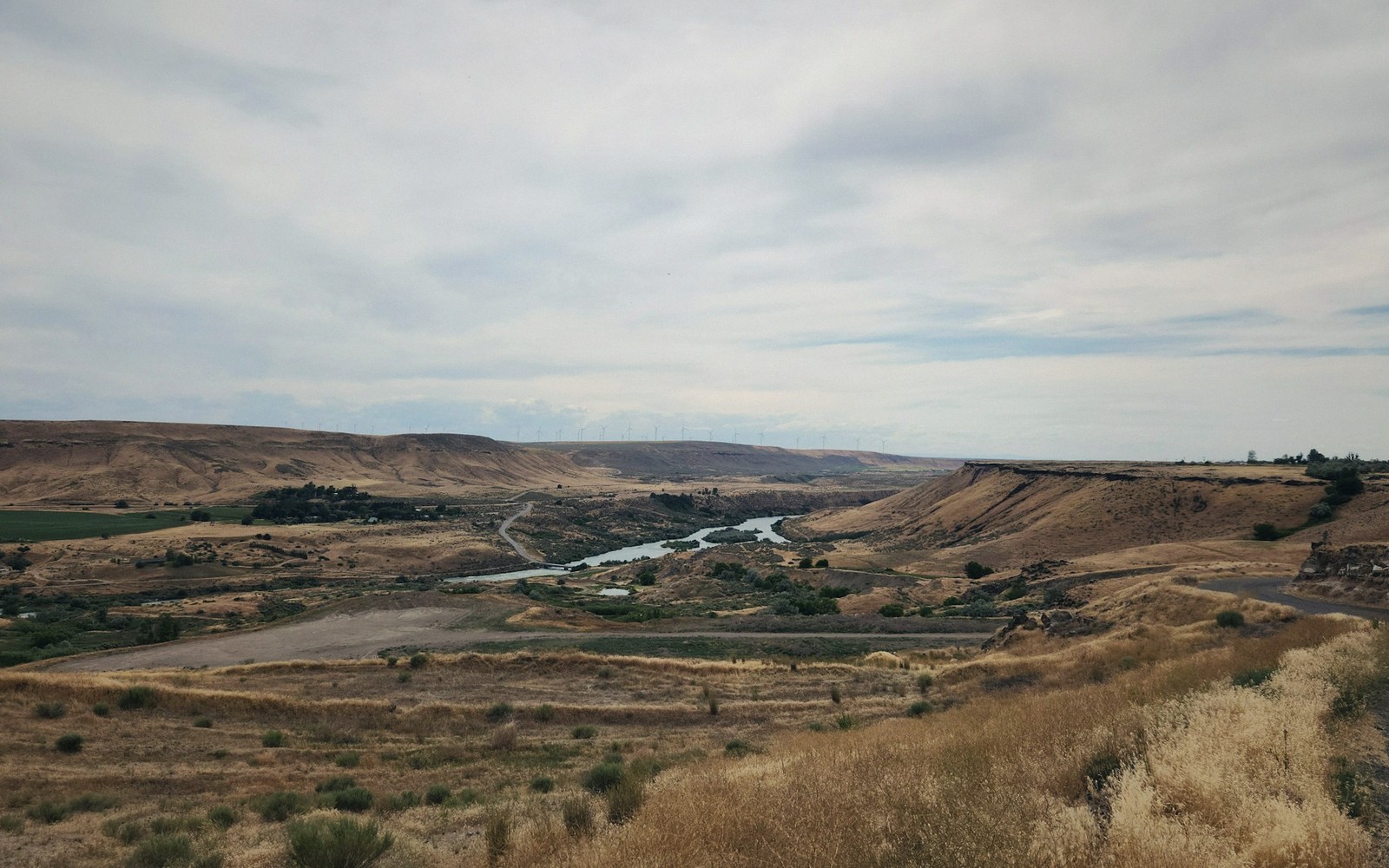
No geography makes Idaho's water stakes more vivid than the Eastern Snake Plain Aquifer — a vast underground reservoir that underlies much of southern Idaho and feeds springs along the Snake River canyon walls. For decades, the relationship between surface water and groundwater in this system was legally murky. Surface irrigators held senior rights to the river; groundwater pumpers — many of them dairy operations and newer agricultural users — drilled into the aquifer without fully accounting for the hydraulic connection between the two. As pumping expanded through the latter half of the twentieth century, spring flows declined, and senior surface-water rights holders found their deliveries short.
The legal and political fight that followed lasted decades. Idaho eventually brokered a series of mitigation agreements and state-managed aquifer recharge programs, where water is intentionally spread onto fields in winter to percolate back underground. The recharge program, which channels Snake River water into spreading sites across the plain, is one of the largest managed aquifer recharge efforts in the United States. It is also a practical illustration of how prior appropriation forces users to negotiate rather than simply pump — because the legal exposure for groundwater users who injure senior rights can be severe.
Water administration on the Snake also involves the federal government, since major reservoirs like American Falls and Palisades were built and are operated by the U.S. Bureau of Reclamation. Federal reclamation projects created much of the infrastructure southern Idaho agriculture depends on, and the interplay between federal storage contracts and state water rights adds another layer to an already complex system.
Cities, Growth and What Comes Next
Prior appropriation was designed for an irrigated agricultural economy, and it still reflects that origin. Roughly ninety percent of Idaho's appropriated water goes to agriculture. But the state is changing. The Treasure Valley — the Boise metropolitan corridor — is among the fastest-growing regions in the country, and that growth is pressing against a water system that does not easily redistribute its hierarchy.
Municipal water systems acquire water rights the same way anyone else does — by filing with IDWR and establishing a priority date. Cities can also acquire existing rights through purchase or transfer, which creates a market for water that older users never anticipated. A water right can be bought and sold in Idaho, though any change in its use, place of diversion or point of delivery requires state approval to ensure that the transfer does not injure other rights holders. That approval process is a frequent source of litigation.
Climate adds pressure that law alone cannot resolve. Snowpack in Idaho's mountains feeds the rivers that fill the reservoirs that supply the canals. As climate patterns shift and drought years become more frequent, the math of prior appropriation grows harsher: there is simply less water to divide, and the gap between what senior rights promise and what the river delivers widens. Low-priority municipal and industrial users, and the most junior agricultural users, feel those gaps first.
The political valence of water in Idaho cuts across conventional lines. Senior irrigators, environmental advocates worried about instream flows, cities competing for water to serve new subdivisions, and federal agencies managing fish and power generation all hold interests that do not map neatly onto party platforms. What they share is an understanding that in the arid West, water is not a background resource — it is the resource. Every other argument about land, growth, agriculture and the shape of Idaho's future is, at some level, an argument about who holds which piece of the river.