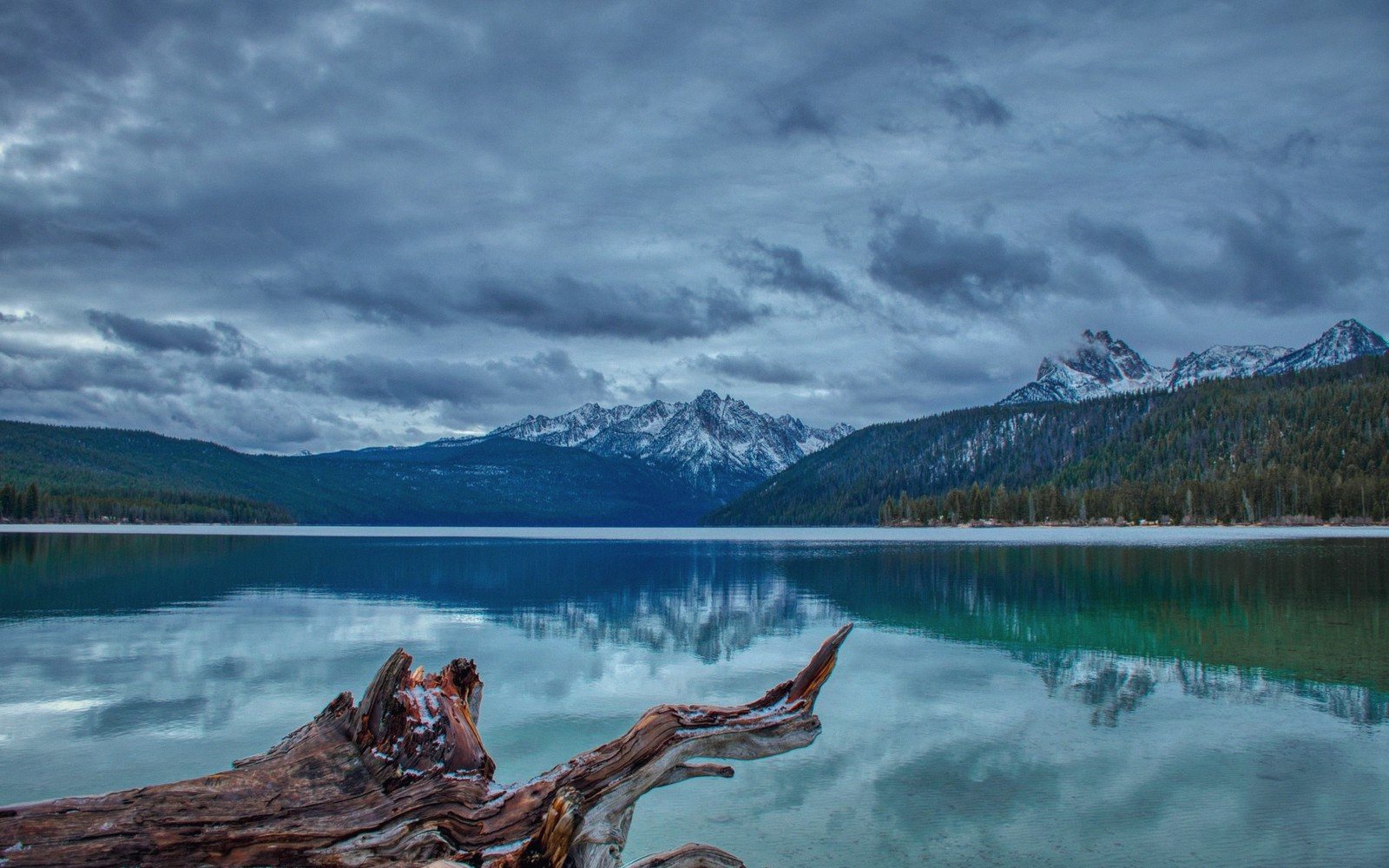
The federal government owns nearly two-thirds of Idaho. That fact alone has shaped the state's economy, its politics, and its identity — and a battle over who should control that land has never really stopped.
The Numbers Behind the Argument
Drive far enough from Boise in almost any direction and you will find a sign marking where private land ends and something else begins — the Nez Perce-Clearwater National Forest, the Sawtooth National Recreation Area, the vast checkerboard of Bureau of Land Management territory across southern Idaho. Add it up and the federal government manages roughly 62 to 63 percent of Idaho's total land area. That puts Idaho among the most federally dominant states in the nation, and it is the root of nearly every major land-use argument the state has had for the past half century.
The agencies doing that managing are mainly the U.S. Forest Service and the Bureau of Land Management, with smaller footprints from the National Park Service, Fish and Wildlife Service, and the Department of Defense. Each agency operates under its own statutory mission, its own planning processes, and its own Washington-set priorities — which, from the perspective of many Idahoans, is precisely the problem.
What the “Local Control” Side Argues
The case for transferring federal lands to state or local control rests on several distinct claims, and they are worth understanding on their own terms.
The economic argument is the most concrete. Federally managed land generally cannot be sold, subdivided, or developed without federal approval, and it generates no local property tax revenue. Counties that are heavily federal — many in central and northern Idaho — rely instead on federal Payment in Lieu of Taxes funds, a program whose funding has fluctuated unpredictably over the years. Ranchers who hold federal grazing permits know their access can be reduced or cancelled by a federal land manager who may never have set foot in the county. Timber operators watched mill after mill close as federal harvest levels dropped sharply in the 1990s, a shift that restructured entire communities. For people who live closest to the land, the argument is simple: decisions made by distant bureaucrats land locally.
For people who live closest to the land, the argument is simple: decisions made by distant bureaucrats land locally.
There is also a constitutional strand to the debate. Some advocates argue that the federal government was always meant to dispose of public land to the states once a territory matured, pointing to the equal-footing doctrine and the terms under which Idaho entered the union in 1890. Legal scholars disagree sharply about whether that reading holds up, but the argument has real purchase in Idaho political culture.
The Idaho Legislature has passed resolutions and legislation over the years calling for the transfer of federal lands to state ownership, reflecting how broadly the sentiment runs in the statehouse.
What the “Keep It Federal” Side Argues
The counter-case is equally earnest, and it draws on constituencies that are large and growing.
Outdoor recreation is now one of Idaho's biggest economic engines. Hunters, anglers, hikers, backcountry skiers, and whitewater rafters depend on public access to land that, under private or even state ownership, could be fenced, leased, or sold. The guarantee of access — the ability to walk across BLM land or camp in a national forest without asking permission — is something that state ownership does not automatically preserve. Critics of transfer point out that states like Utah and Idaho simply do not have the budget to manage millions of acres of fire-prone, ecologically complex terrain. When federal land burns, federal suppression dollars flow in; a state bearing that cost alone would face a fiscal shock.
Environmental and tribal voices add other dimensions. Many federal land designations protect habitat for species that do not respect county lines. Tribal nations, several of which have treaty rights tied to federal lands in Idaho, have generally opposed transfer proposals, arguing that treaty protections are more secure under federal management than under state discretion. Conservation groups contend that state lands in the West have historically been managed with revenue generation as a primary goal, which can conflict with watershed health, wildlife corridors, and long-term ecological resilience.
Why It Never Gets Fully Resolved
The fight persists partly because neither side can deliver a clean win. A genuine transfer of title would require an act of Congress, and Congress has shown little appetite for it. Federal land managers, meanwhile, operate under planning rules that mandate public input — a process that lets local voices in but does not let them govern.
What actually happens on the ground is a continuous negotiation: grazing allotments renewed or contested, forest management plans challenged in court, wilderness designations debated in public hearings. Water rights are tangled into this too, since water that originates on federal land eventually flows onto private and state ground below.
For newcomers to Idaho, the public lands debate can look like a regional quirk. It is not. It is the central tension of a state where most of the map belongs to the federal government, where communities were built around access to that map, and where the question of who decides — and for whom — has no simple answer.