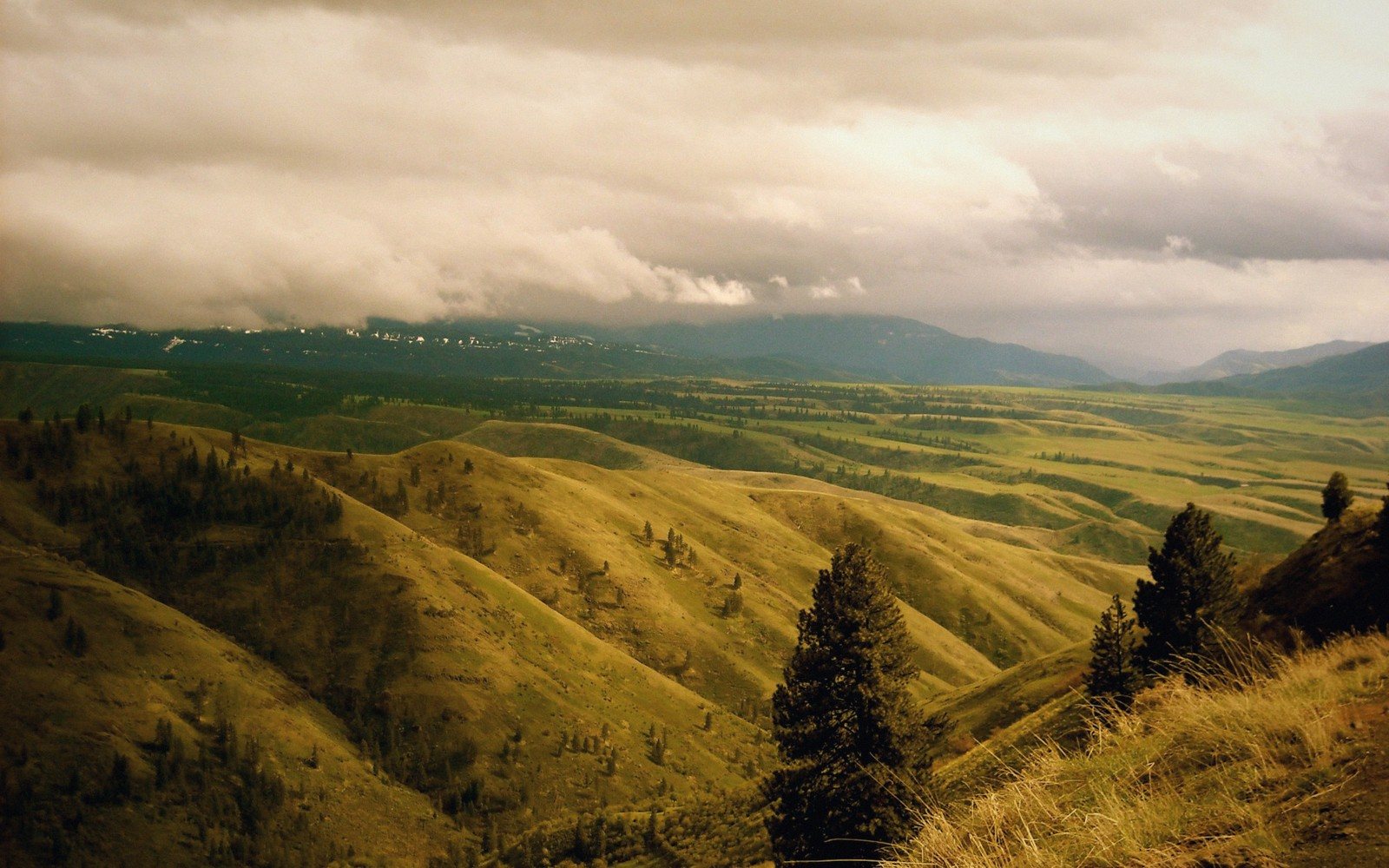
From a competitive frontier state to one of the most reliably Republican in the nation — the structural forces that explain why.
From Frontier to One-Party Dominance
Idaho entered the Union in 1890 carrying the rough political pluralism of its origins: mining towns with strong labor traditions, farming communities dependent on federal irrigation projects, and remote mountain counties whose residents wanted to be left alone. For much of the twentieth century, that mix meant real competition. Democrats held statewide offices, won U.S. Senate seats, and governed effectively. The party's support for rural electrification, water infrastructure, and federal land programs gave it durable appeal in an agricultural state.
The shift came in layers. The social realignments of the 1960s and 1970s loosened voters' inherited party loyalties across the country, and Idaho was no exception. As national Democrats moved leftward on cultural issues, rural and small-town Idahoans — many of them deeply religious, skeptical of federal regulation, and attached to ranching, timber, and mining — drifted toward the Republican Party. By the 1980s the drift had become a migration. Through the 1990s Idaho consolidated into one of the most reliably Republican states in the country, a position it has held through every presidential cycle since.
The Geography of Idaho Politics
The state's political character is not uniform — it is spatial. Understanding Idaho means reading the map.
The Treasure Valley, anchored by the Boise metropolitan area, is the state's demographic engine. Population growth driven by in-migration from California, the Pacific Northwest, and elsewhere has brought a more diverse electorate and made Ada County genuinely competitive in ways that would have seemed unlikely two decades ago. Canyon County, just to the west, remains strongly Republican. The tension between these two adjacent counties captures, in miniature, the state's larger urban-rural fault line.
North Idaho — the Idaho Panhandle stretching from Coeur d'Alene to the Canadian border — is among the most conservative regions in the country. Historically timber and mining country, it drew significant migration from the Midwest and, in more recent decades, from West Coast residents seeking lower costs and more conservative neighbors. That in-migration has deepened rather than diluted its Republican tilt.
North Idaho — the Idaho Panhandle stretching from Coeur d'Alene to the Canadian border — is among the most conservative regions in the country.
The Snake River Plain running east through Twin Falls, Pocatello, and Idaho Falls is the backbone of agricultural Idaho, home to the state's potato, dairy, and sugar-beet industries. Eastern Idaho also carries a high concentration of members of The Church of Jesus Christ of Latter-day Saints, whose cultural emphasis on community, self-reliance, and traditional family structure has historically aligned well with the Republican Party's messaging on those themes.
Blaine County — Sun Valley and the Wood River Valley — stands as the clearest outlier, a resort and recreation economy with a wealthier, more transient population that has voted Democratic in statewide races for years.
The Structural Forces Underneath
No single event explains Republican dominance; several structural realities reinforce it. Public-lands policy is perhaps the most persistent: in a state where the federal government manages roughly 60 percent of the land, disputes over grazing, logging, mining, and water use have made federal overreach a live grievance across generations. Republican messaging on local control and property rights resonates here in ways it simply does not in more urbanized states.
Idaho's economy also matters. Agriculture, natural resources, and small business remain large relative to the public and professional-services sectors that tend to produce more Democratic-leaning voters. And the state's population, though growing fast in the Treasure Valley, is still sparse outside it — which means rural and small-town voices carry structural weight in a legislature built on geographic representation.
The landscape, in other words, reflects the land.